
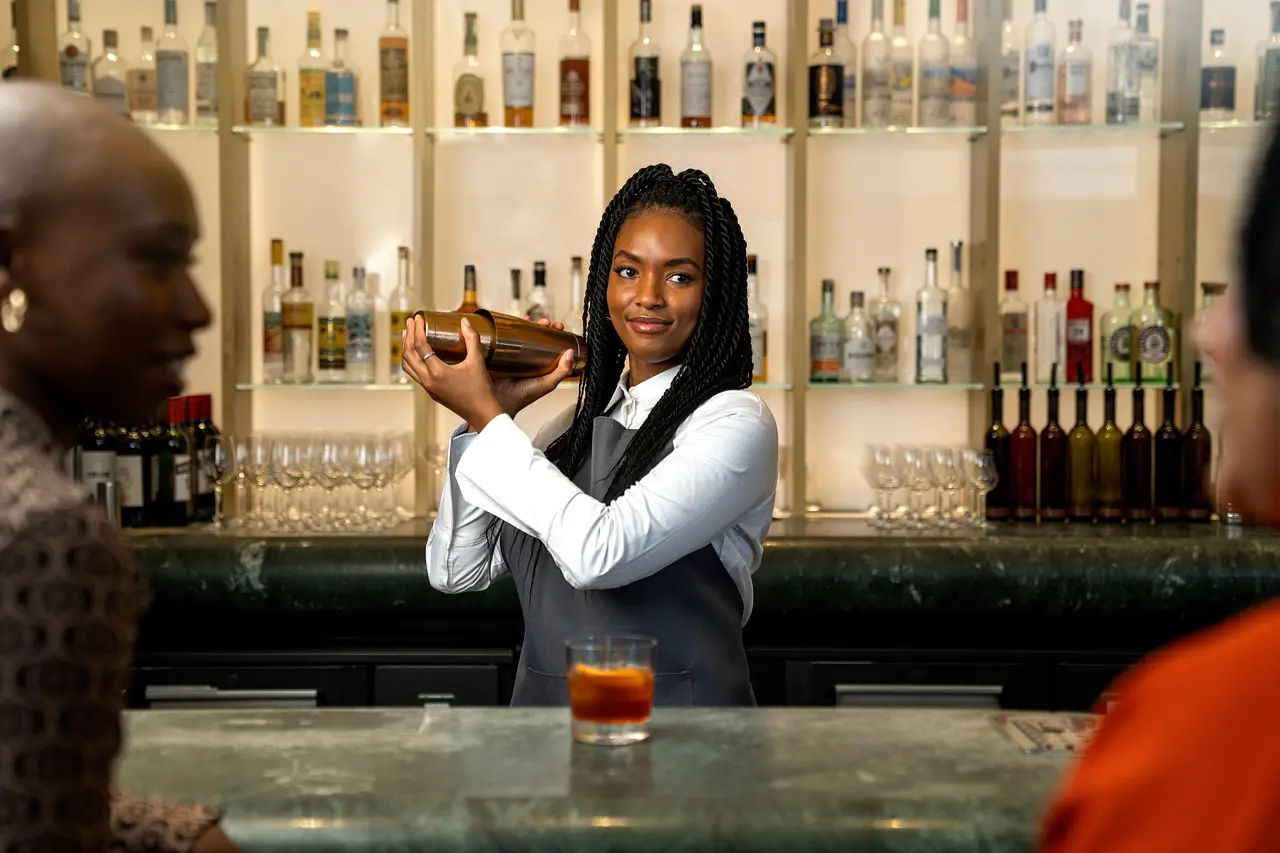
Build a unified hospitality stack that owns the guest journey — reservations, table and room ordering, loyalty, payments, feedback and CRM — all on brand and free from per‑user SaaS fees or vendor lock‑in. The approach below turns fragmented tools into a single, conversion‑focused platform that increases repeat visits and protects margin.
Most hospitality teams stitch together multiple SaaS tools for bookings, POS, loyalty and feedback. That short‑term convenience creates long‑term problems:
These issues reduce repeat visits, increase manual work, and make it hard to own the guest relationship.
A bespoke hospitality platform removes those constraints and turns guest experience into a competitive advantage:
Flexible table and room rules, event bookings, waitlists, and capacity controls with real‑time conflict resolution.
Menu management, modifiers, timed orders, kitchen routing, and order tracking that reduce friction and increase average order value.
Tiered rewards, referral incentives, targeted promos and personalised offers that drive repeat visits and higher LTV.
PCI‑aware payment flows, saved payment methods, deposits, pre‑authorisations and integrated tipping to protect revenue and speed checkout.
NPS, post‑stay surveys, review capture and automated service‑recovery workflows to protect reputation and reduce churn.
Unified guest profiles, behavioural segments, and campaign tools for targeted email/SMS offers and lifecycle marketing.
Shift rostering, order dashboards, manual overrides, reconciliation tools and audit logs so operations scale without chaos.
flowchart LR
    %% CLIENT LAYER
    subgraph Client["Client Applications"]
        WebApp["Web App"]
        MobileApp["Mobile App"]
    end
    %% API GATEWAY
    APIGW["API Gateway / BFF<br/>- Auth<br/>- Rate limiting<br/>- Routing"]
    Client --> APIGW
    %% CORE SERVICES
    subgraph CoreServices["Core Backend Services"]
        HotelSvc["Hotel Service<br/>(Static data, caching)"]
        SearchSvc["Search Service<br/>(Elasticsearch)"]
        ReservationSvc["Reservation Service<br/>(Strong consistency)"]
        PaymentSvc["Payment Service"]
        NotificationSvc["Notification Service"]
        RateSvc["Rate Service<br/>(Dynamic pricing)"]
    end
    %% DATABASES
    subgraph Databases["Primary Datastores"]
        Postgres[(PostgreSQL<br/>Source of Truth)]
        ES[(Elasticsearch<br/>Search Index)]
        Redis[(Redis Cache)]
    end
    %% MESSAGE BUS
    MQ["Message Queue<br/>(Kafka / RabbitMQ)"]
    %% FLOWS
    APIGW -->|Search Hotels| SearchSvc
    SearchSvc --> ES
    APIGW -->|Get Hotel Details| HotelSvc
    HotelSvc --> Redis
    HotelSvc --> Postgres
    APIGW -->|Check Availability| ReservationSvc
    ReservationSvc --> Postgres
    APIGW -->|Create Reservation| ReservationSvc
    ReservationSvc -->|Write Inventory| Postgres
    ReservationSvc --> MQ
    MQ --> SearchSvc
    MQ --> NotificationSvc
    APIGW -->|Start Payment| PaymentSvc
    PaymentSvc --> Postgres
    PaymentSvc -->|On Success| ReservationSvc
    ReservationSvc -->|Confirm Booking| Postgres
    RateSvc --> Postgres
    RateSvc --> Redis
    %% ADMIN PANEL
    Admin["Hotel Admin Portal"]
    Admin --> HotelSvc
    Admin --> RateSvc
    Admin --> ReservationSvc
This diagram illustrates a modern, production‑grade architecture for a hotel booking platform, separating concerns across search, booking, pricing, and operational workflows. It highlights the distinction between strong‑consistency booking paths and eventual‑consistency search paths, while showing how services interact through APIs, databases, and asynchronous messaging.
The system supports multiple user interfaces:
Both communicate through a unified API Gateway / Backend‑for‑Frontend (BFF), which handles:
The backend is decomposed into independently scalable services:
The system uses a combination of storage technologies:
A distributed message bus (Kafka or RabbitMQ) is used for:
This ensures the system remains responsive even under high load.
A dedicated Hotel Admin Portal allows hotel operators to:
It interacts directly with Hotel Service, Rate Service, and Reservation Service.
This architecture powers a fast, reliable, and scalable hotel booking experience—designed for brands that want to deliver seamless search, real‑time availability, and frictionless reservations.
At the front end, customers interact through a modern web or mobile app. All requests flow through a unified API Gateway that handles authentication, routing, and performance optimisation.
Behind the scenes, specialised backend services manage each part of the journey:
A combination of PostgreSQL, Redis, and Elasticsearch ensures the perfect balance of accuracy, speed, and scalability. A message queue keeps everything in sync, enabling smooth updates and a responsive user experience—even under heavy load.
For hotel teams, an admin portal provides full control over inventory, pricing, and reservations.
This architecture is built for performance, reliability, and growth—ideal for hospitality brands ready to elevate their digital guest experience.
“A single owned platform unified our guest journey and increased repeat visits.” — Group GM, Hospitality Chain.
If you want a version tailored for a specific venue type (restaurants, hotels, bars, or events), or a short landing page for paid traffic, I’ll adapt the copy and CTAs to match that audience.